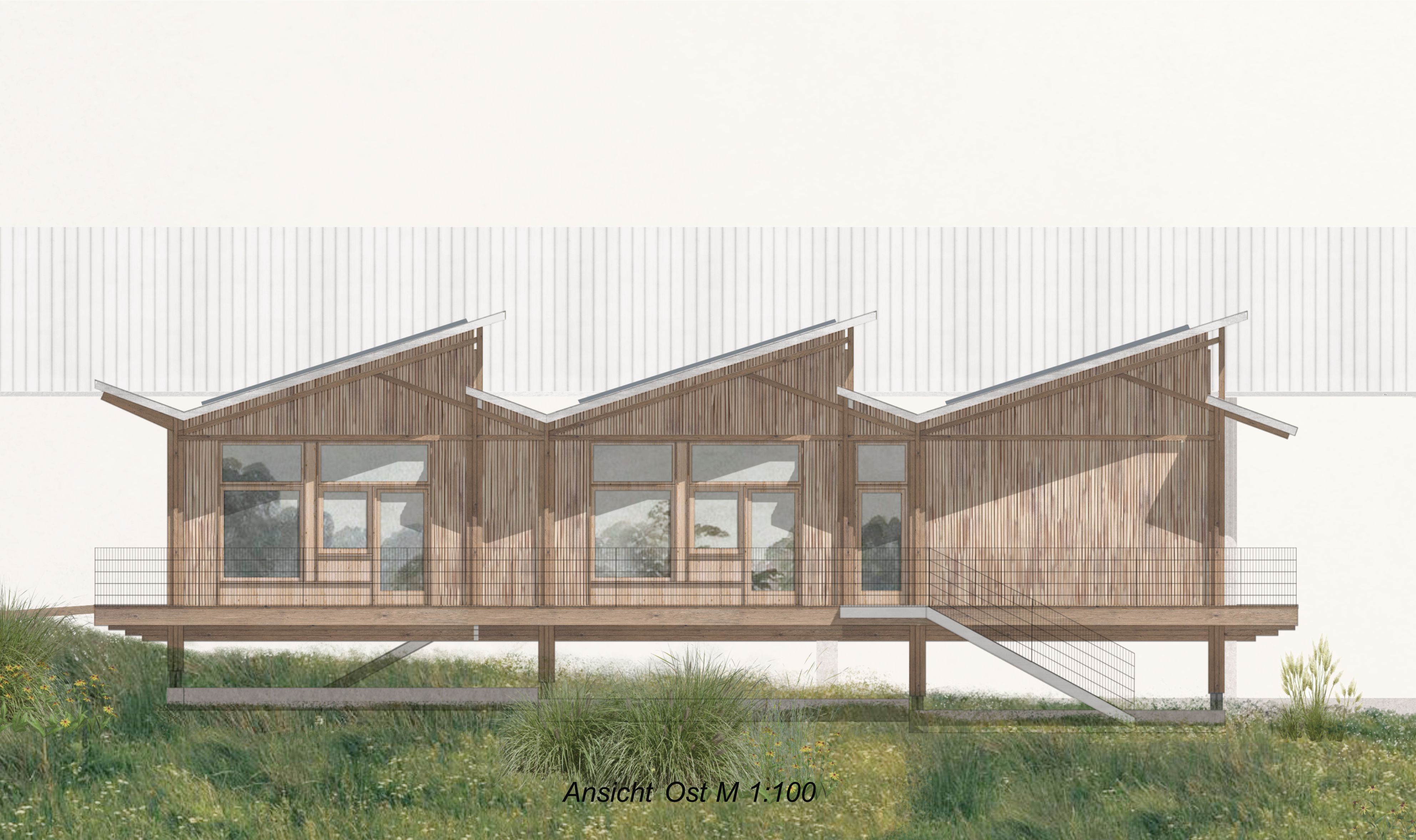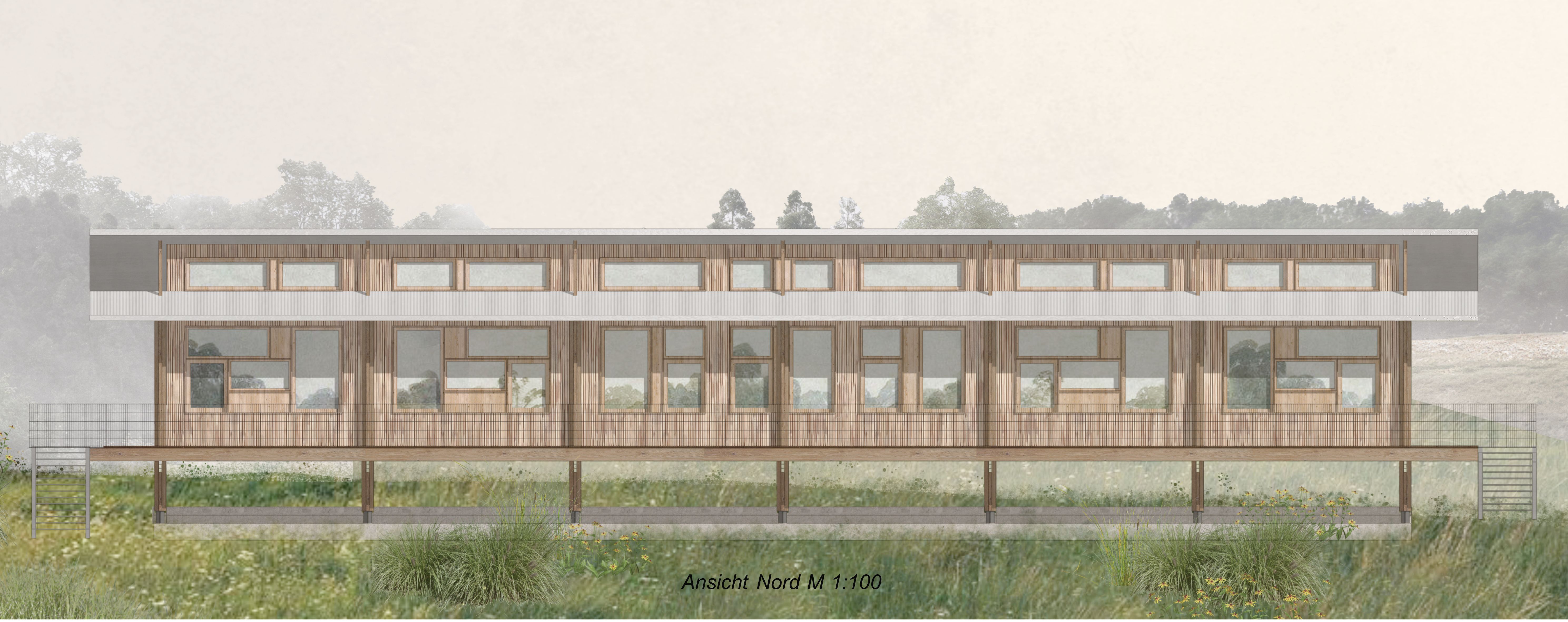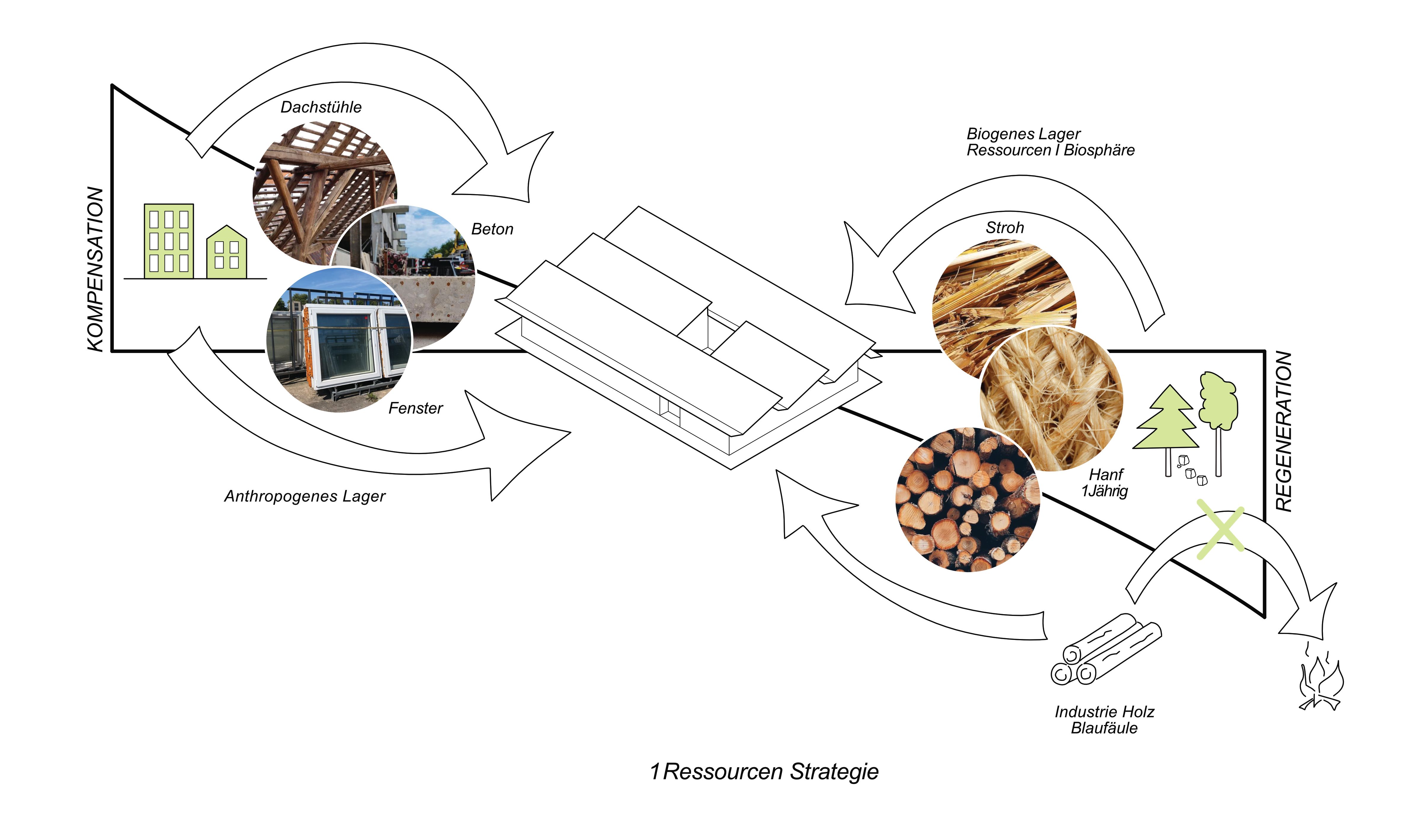
The concept follows a dual strategy: the consistent use of reused materials in all component layers and the integration of renewable building materials, which are generally not used as materials but rather for thermal recovery. By combining this circular and regenerative strategy, existing building materials are reused and further processed, while biogenic CO2 is stored within the structure instead of being released into the atmosphere through thermal recovery. This enables both compensation (avoiding new emissions) and regeneration (storage of CO2 from the biosphere).
Particular attention is paid to the foundation. Due to the risk of uneven settlement described in the soil survey, individual footings are omitted. Instead, the columns rest on load-distributing concrete beams, which in turn rest on a one-meter-deep foundation pad reinforced with two layers of geotextiles. To reduce non-renewable resources, the reuse of existing concrete beams is proposed. These are joined to form a rigid foundation beam by bonding in reinforcement, welding the joints, and filling them with concrete. Increased concrete cover can be achieved by laying the beams in a mortar bed or by adding a thinner layer of fresh concrete. This significantly reduces concrete consumption – an ecological advantage.