
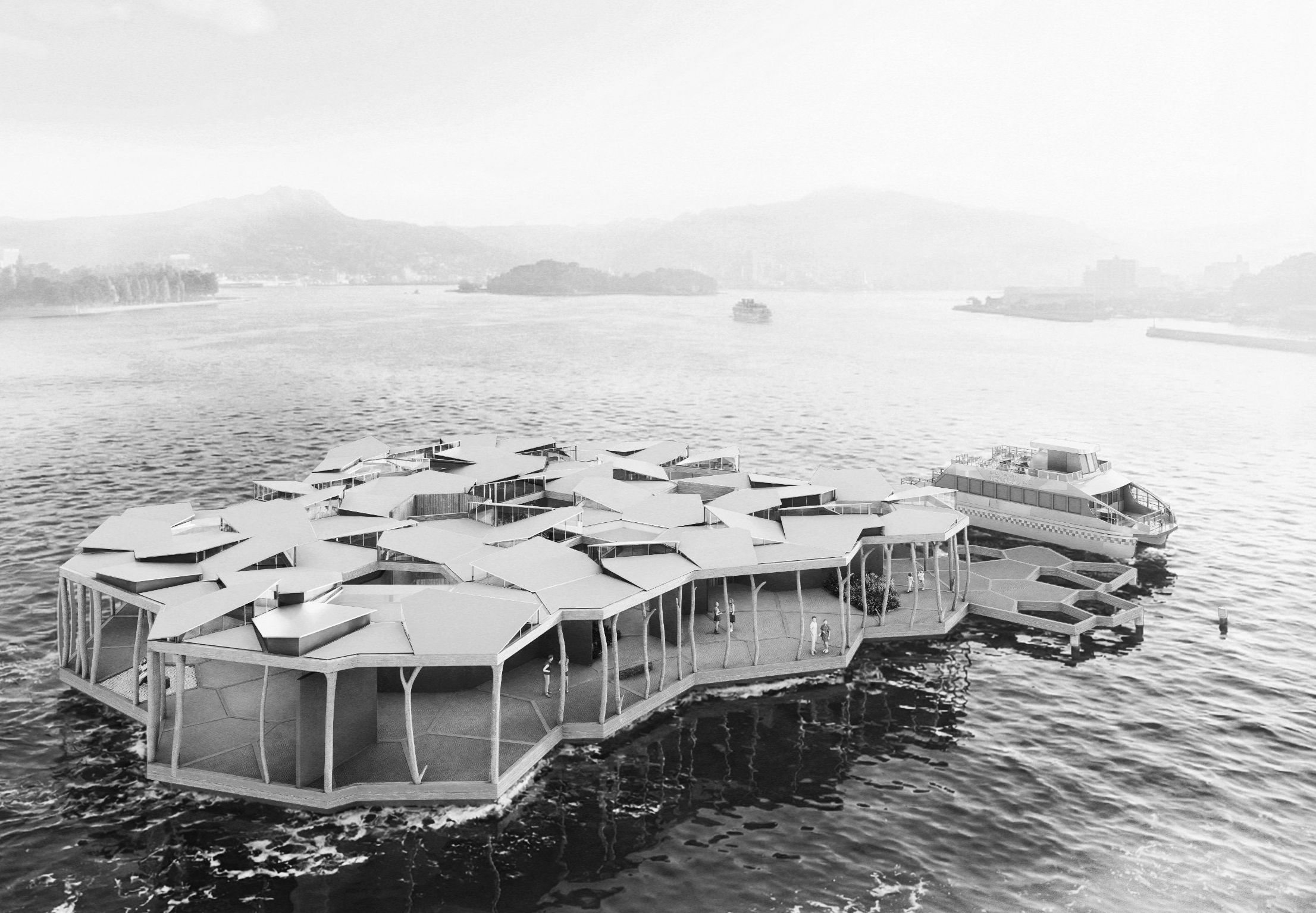
Hiroshima – the place where humanity became aware of the absolute extent of its capabilities – is to become a place of reflection and silence, which can be understood as a call to accept responsibility for ourselves and the planet. For alongside the destructive power that lies in our hands, we should simultaneously become aware of the beauty and potential that can be found in collective, positive strategies.
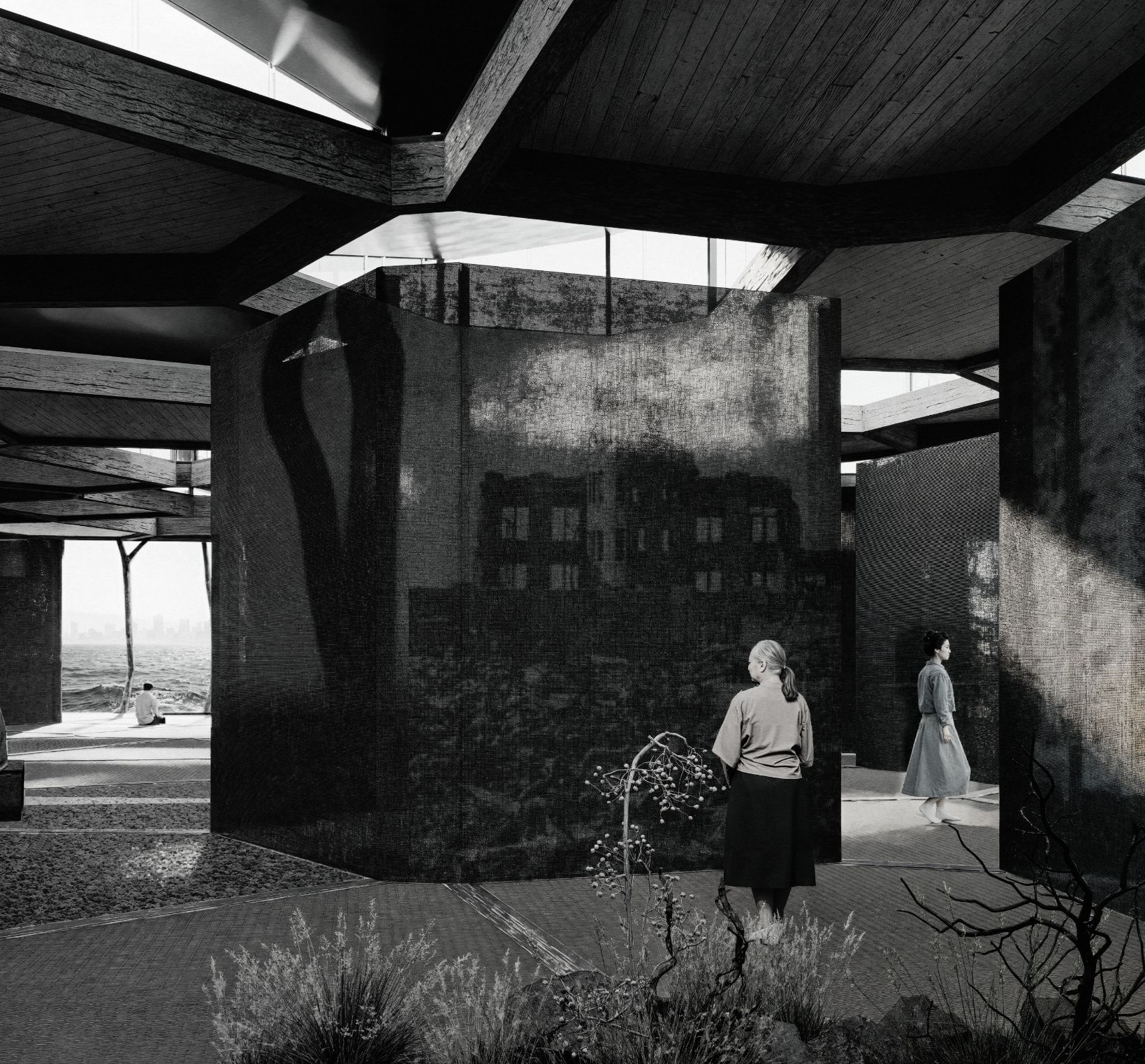
The project creates an interplay between interior and exterior spaces and interacts with the surrounding nature. This results in spaces that, depending on the weather and the time of day and year, allow visitors to engage in an inner dialogue without imposing any didactic or moral message.
The project aims to be a positive example of how architecture can function with regenerative strategies and contribute to the preservation of the planet.

Organic Metabolism
The spatial installation itself is intended to exemplify these potentials. Positioned as a floating structure in Hiroshima Bay, the project exists on the water and does not occupy or seal any land. The distance from the city creates a detached perspective on the site of the destruction and the regeneration and resilience of the inhabitants since the event 80 years ago.
The architectural structure references historical Shinto and Buddhist temples and follows the principle of "organic metabolism"—a structure without beginning or end. Its geometry is based on irregular pentagons, which are modularly constructed. It is less a building and more a spatial sculpture for introspection and reflection.
